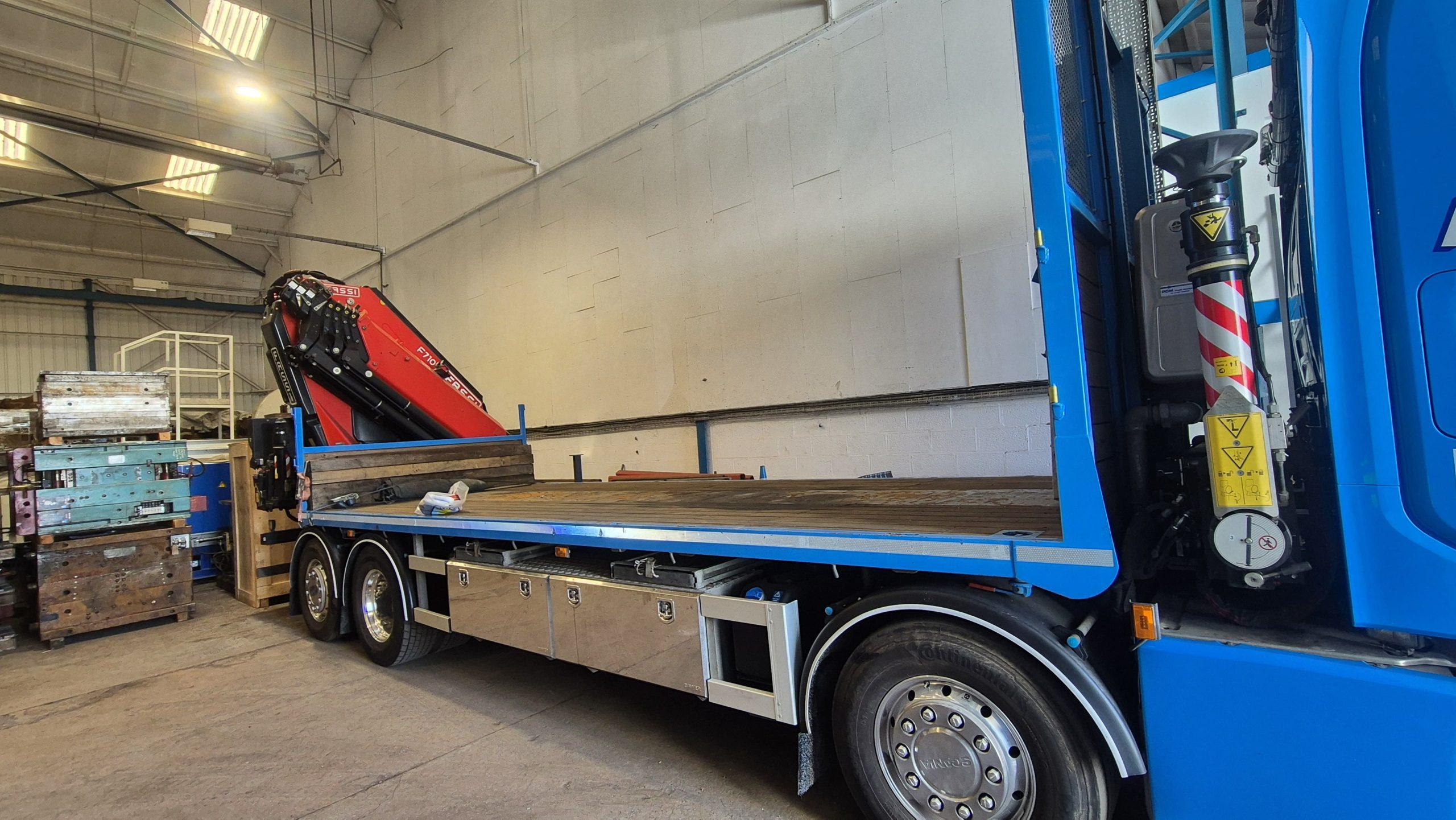
Keeping Operations Moving Beyond Production: A Structured Approach to Warehousing
Production cycles may pause, but operational demand rarely does.
Across manufacturing, engineering and distribution environments, retained tooling, overflow assets, and surplus stock often continue to occupy valuable warehouse space. Whether held long-term for potential future use or temporarily during operational changes, these items still require secure storage, controlled access and careful planning.
Warehouse Space as an Operational Resource
Warehouse capacity is increasingly treated as a strategic asset within modern supply chains.
Tooling retained for future automotive use, engineering equipment awaiting redeployment, or surplus retail stock requiring relocation all compete for internal space. As operations evolve, businesses must balance active production with legacy or overflow assets that cannot simply be removed.
Without structure, off-site storage can quickly become disconnected from day-to-day operations. The challenge isn’t finding space; it’s ensuring that space supports visibility, access and control.
This is where a more considered approach to warehousing becomes important.
A Structured Approach to Warehousing
At Freightline, warehousing is designed to complement operational planning, not sit separately from it.
Our warehouse support is built around structured asset retention, supporting both long-term storage and temporary operational holding.
Our warehousing capability currently supports customers through services including:
- Storage of manufacturing tooling used to produce automotive parts.
- Heavy tooling is held securely at specialist partner facilities.
- Lighter tools and overflow assets are stored within structured warehouse environments.
- Boxed trailer solutions for retail clients requiring surplus stock relocation or temporary holding.
Every stored item remains securely organised and readily accessible when required, providing customers with reliable tracking, visibility, and peace of mind.
Controlled Access When Assets Are Required
Storage is only valuable if assets remain accessible when they are needed.
Freightline ensures that stored items can be retrieved and returned to operational sites in a controlled, coordinated manner. When customers require tooling, equipment or stored goods, our team manages the retrieval and transport process to align with operational schedules.
By integrating warehousing with our transport capability, we maintain clear oversight of how and when assets move. This ensures businesses retain confidence that important assets remain secure, organised and readily available when required.
Supporting Continuity During Operational Pauses
Operational pauses, including planned shutdown periods, require proactive planning. Warehousing support can help businesses avoid delays, missed deliveries and unnecessary disruption when sites temporarily close.
We regularly support customers who pre-position goods or tooling in advance of closure periods, holding items securely until sites reopen. This ensures:
- Deliveries do not arrive at unmanned premises.
- Production restarts without avoidable delay.
- Assets remain secure during inactive periods.
- Lead times are reduced once operations resume.
By integrating warehousing into planning, businesses maintain control even when production is temporarily paused.
Flexible Shunting and Local Site Support
Warehousing support is often complemented by localised shunting services.
Freightline provides day-rate shunting across multiple industries, not solely automotive or storage clients. Typical movements include:
- Transfers between nearby operational sites.
- Back-and-forth movements between facilities.
- Internal repositioning within large warehouse complexes.
This operational flexibility ensures that stored or relocated assets continue to move efficiently when required.
Warehousing as Part of Operational Strategy
Warehouse space will always be under pressure as operations evolve, production cycles shift, and businesses adapt to changing demand.
Approaching warehousing as part of operational planning, rather than simply a place to store surplus items, helps organisations retain control over valuable assets while maintaining flexibility across their logistics network.
At Freightline, warehousing forms part of a broader operational approach. By combining storage, coordinated access and transport support, Freightline helps customers maintain visibility, protect critical assets and keep operations moving beyond production cycles.